
How to Choose a Filing Cabinet: 2-Drawer or 3-Drawer?

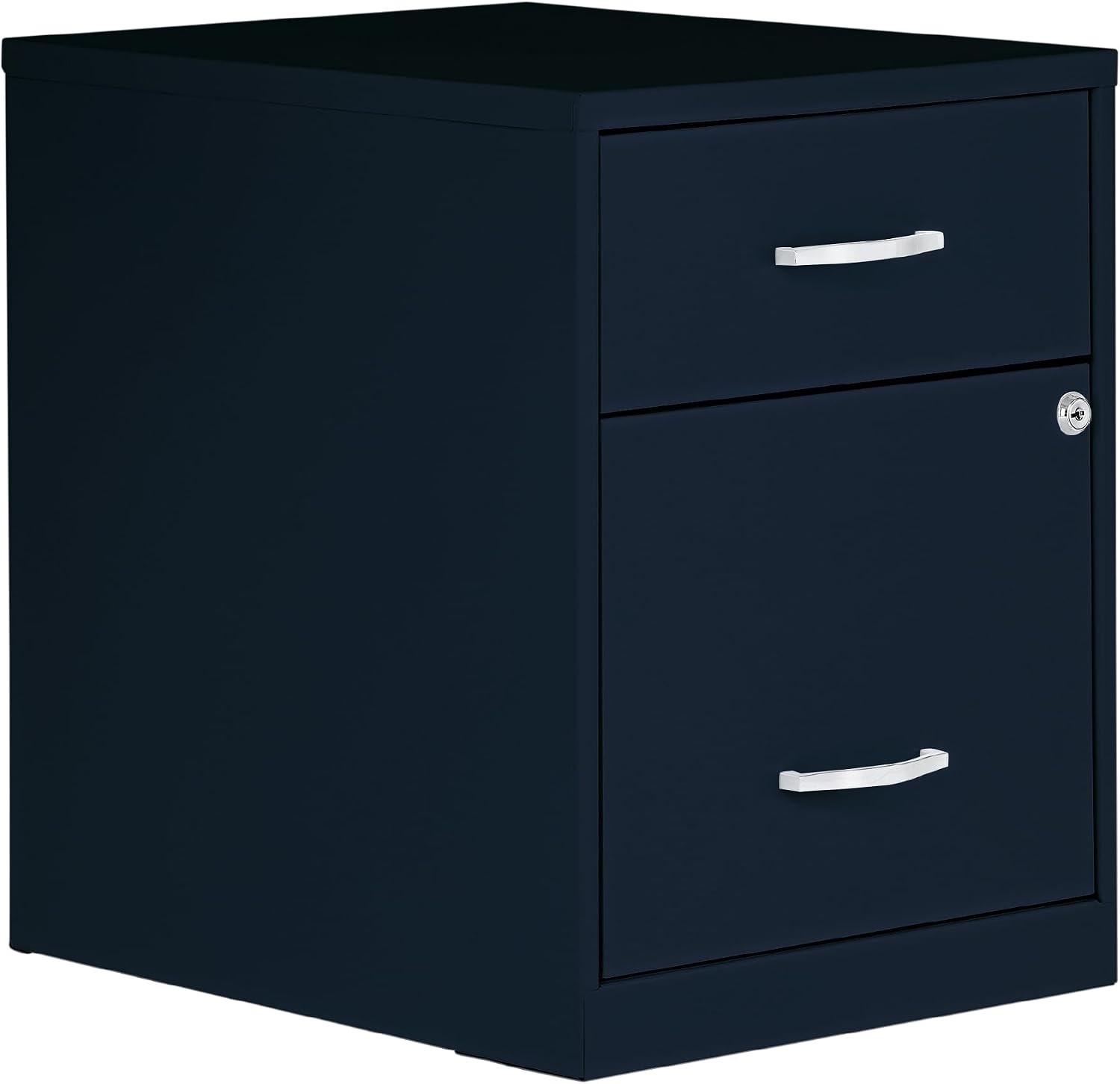
Most people buy a filing cabinet once and live with it for a decade, so the drawer count is worth ten minutes of thought. Here is how to decide without measuring your entire office.
Start With How Much Paper You Actually Keep
Count what you file in a year, not what you own today. A household with insurance papers, school records, tax files and warranty cards fills roughly one drawer a year and then stops growing. A consulting practice or clinic fills two.
Two Drawers: Compact and Honest
A two-drawer unit fits under most desks, doubles as a side table, and keeps the top surface at a height you can actually use. If your filing is personal or you are working from a bedroom corner, this is usually the right answer.
Three Drawers: Room to Sort
The third drawer is rarely about volume — it is about separation. Current year, closed years, and everything that is not a document (cables, stationery, spare keys). If you already keep three distinct piles, buy three drawers.
Check the Lock Before the Looks
A cabinet holding financial records needs a lock that turns cleanly and keys that are not an afterthought. Test it on arrival, and keep the spare key somewhere other than the top drawer.
Mind the Drawer Travel
Full-extension runners let you reach the file at the back; partial-extension runners do not. This is the single difference most people notice a year later.
Where to Stand It
Leave clearance in front equal to the drawer depth, keep it off damp exterior walls in monsoon-prone rooms, and level the feet — a cabinet that leans is a cabinet whose drawers drift shut.
In Short
Two drawers for a home office that files personal paperwork; three when you need to separate live work from archive. Both ship free anywhere in India, and if one arrives damaged we replace it.